
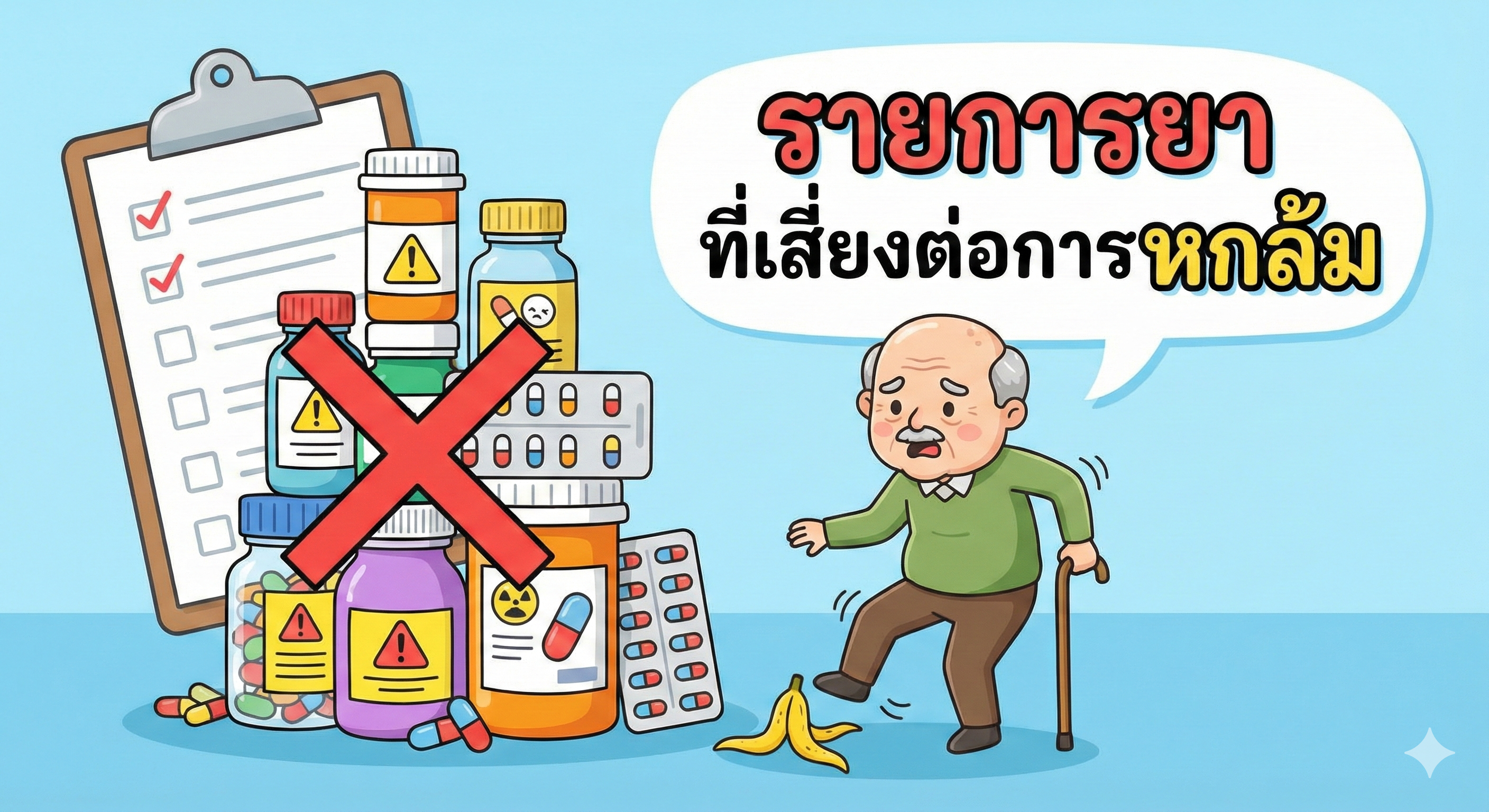
The "Fall Risk" Medication Checklist: 3 Drug Groups Elderly Caregivers Must Watch
Compiled by: Pharmacist Krongthong Puttipokin
Falls in the elderly are dangerous and can be life-threatening. But did you know that the daily medications your loved ones take could be a hidden cause increasing this risk? Certain drugs have side effects that cause drowsiness, dizziness, or loss of balance.
Pharmacist Krongthong Puttipokin has compiled a checklist of medications that pose a high risk of causing falls. We have categorized them into 3 major groups so caregivers and family members can easily check and monitor them.
Group 1: Nervous System Medications (Highest Risk)
Drugs in this group depress the central nervous system, leading to drowsiness, confusion, dizziness, or slowed reaction times—the primary causes of losing balance.
Sleeping Pills & Anti-Anxiety Meds (Benzodiazepines & Hypnotics):
Examples: Alprazolam, Diazepam, Lorazepam, Zolpidem.
Effect: Severe drowsiness, confusion ("brain fog"), and muscle weakness.
Antidepressants:
Examples: Fluoxetine, Sertraline, Amitriptyline.
Effect: May cause a drop in blood pressure when standing up, dizziness, or confusion.
Antihistamines (Allergy Meds):
Examples: Chlorpheniramine (CPM), Diphenhydramine.
Effect: Especially the "drowsy" types, these cause blurred vision, urinary retention, and heavy sedation.
Opioid Pain Relievers (Narcotics):
Examples: Tramadol, Morphine, Fentanyl.
Effect: Causes significant dizziness and fainting spells.
Anticonvulsants & Muscle Relaxants:
Examples: Gabapentin, Pregabalin, Baclofen, Tolperisone.
Group 2: Cardiovascular Medications
These medications often lower blood pressure or temporarily reduce blood flow to the brain, leading to Orthostatic Hypotension (dizziness or blacking out when standing up quickly).
Antihypertensives (Blood Pressure Meds):
Examples: Amlodipine, Enalapril, Losartan, Prazosin.
Beta-blockers: Atenolol, Propranolol.
Diuretics (Water Pills):
Examples: Furosemide, HCTZ.
Effect: Frequent urination, fatigue from electrolyte loss, and hypotension due to dehydration.
Heart Vasodilators (Nitrates):
Examples: Isosorbide dinitrate.
Effect: Can cause a severe drop in blood pressure and bradycardia (slow heart rate).
Group 3: Other High-Risk Medications
Diabetes Medications (Hypoglycemics):
Examples: Glipizide, Gliclazide.
Effect: If blood sugar drops too low (Hypoglycemia), it causes palpitations, dizziness, and fainting.
Anti-Inflammatory Painkillers (NSAIDs):
Examples: Ibuprofen, Diclofenac, Naproxen.
Effect: May cause dizziness and confusion in some elderly patients.
Acid Reflux Medication (PPIs):
Examples: Omeprazole.
Effect: Long-term use increases the risk of Osteoporosis and bone fractures if a fall occurs.
Steroids:
Examples: Prednisolone, Dexamethasone.
Effect: Can cause confusion, agitation, or muscle weakness (myopathy).
⚠️ Important Advice for Caregivers
If the elderly person in your care is taking any of these medications: DO NOT stop the medication on your own.
Sudden withdrawal can be dangerous. Instead, please consult a doctor or pharmacist. They can evaluate the risk, adjust the dosage, or recommend specific fall prevention strategies to keep your loved ones safe.
Source: https://www.rama.mahidol.ac.th/fammed/th/article/patient/28jul2020-1244
