
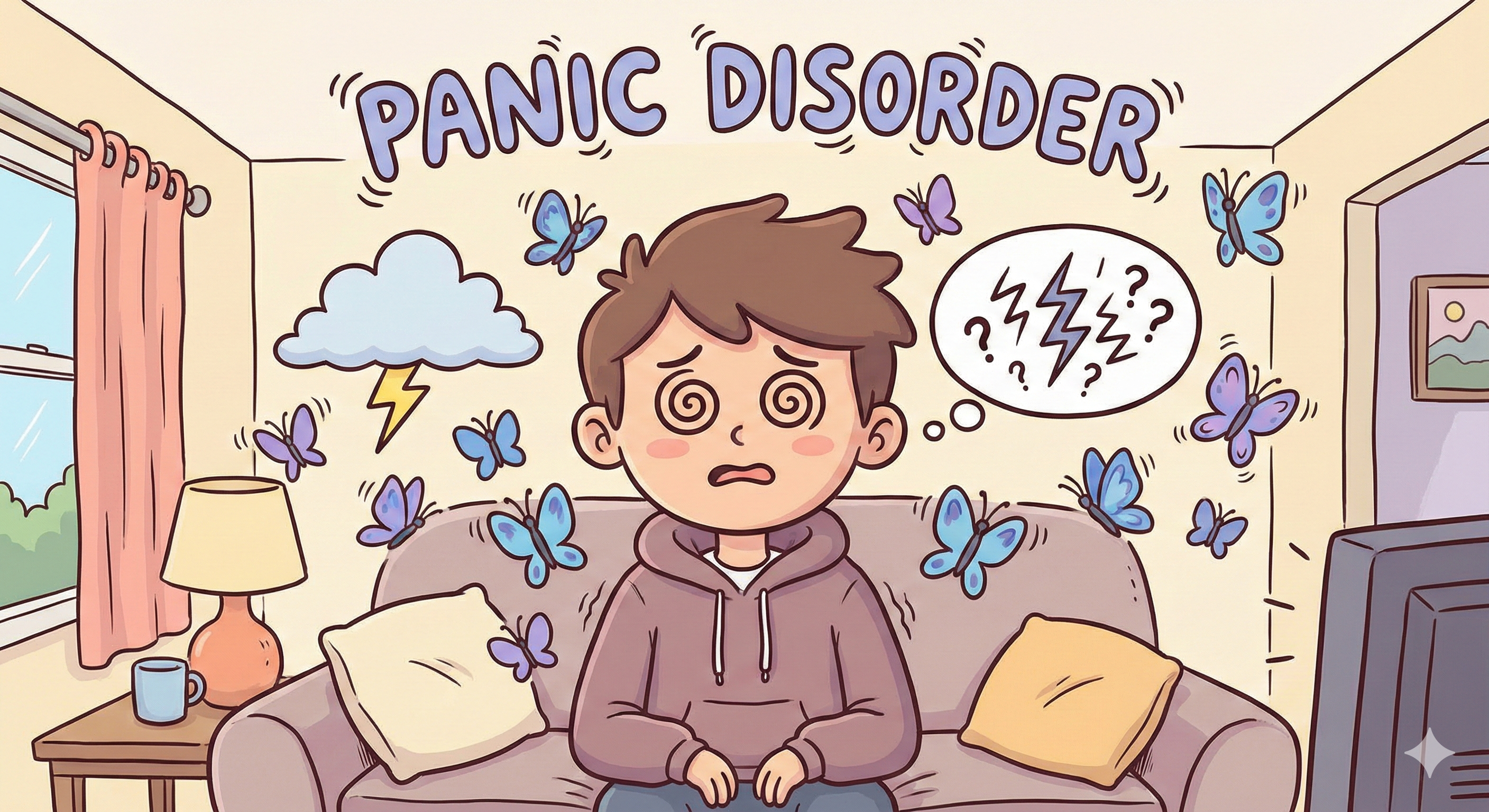
Panic Attacks & Panic Disorder: A Complete Guide to Understanding and Healing
1. Know the Condition
Panic attacks are more common than you might think—occurring in up to 1 in 4 people in the general population. They often first appear during early adulthood and can be triggered by stress, certain substances, or may occur spontaneously without any clear cause.
The good news is that if patients and their loved ones understand the disease, it can be managed effectively. Panic Disorder is treatable. You will not die from it, it does not cause permanent disability, and you can recover.
2. Understand the Symptoms
Panic Disorder is caused by an imbalance in the nervous system and body chemicals, leading to an overreaction (a "false alarm" in the body). This results in intense physical and mental symptoms, including:
Physical: Profuse sweating, heart palpitations, trembling, shortness of breath, sensation of choking, chest pain, numbness/tingling, nausea, abdominal distress, dizziness, or feeling faint.
Sensory: Hot flashes or chills, feeling detached from reality (derealization), or feeling that the environment has changed strangely.
Emotional: An intense fear of losing control, fear of "going crazy," or a terrifying fear of dying.
Note: These symptoms feel very real and intense. It is crucial to be diagnosed by a doctor first to rule out other physical conditions.
3. Treatment Guidelines
1. Medication is Key*
Medication helps regulate the chemical imbalance.
The Protocol: Typically, doctors will maintain a dosage that controls symptoms for 12 months, then gradually taper the dose down over 2–6 months.
The Rule: Adjust medications only with your doctor. Do not stop taking medication on your own, as this is vital for controlling symptoms and reducing the chance of relapse.
2. Learn Self-Management
Medication works best when paired with learning how to cope with symptoms during an attack (see section 4).
3. Lifestyle Changes
Avoid/Stop: Caffeine, alcohol, recreational drugs, and unnecessary stress.
Identify Triggers: Avoid known triggers if possible.
Sleep: Ensure you get adequate rest.
4. How to Manage a Panic Attack
1. Relaxation Technique (Deep Breathing)
Calming the body can stop the physical spiral of panic.
How: Practice slow, deep breathing. Place your hand on your belly—feel it rise as you inhale and fall as you exhale.
When: Practice this every morning and evening for 10 minutes to build resilience, and use it immediately during a panic attack.
2. Mindfulness
Train your mind to stay in the present moment.
The Mindset: Let the feelings come and go like a wave; do not fight them.
The Affirmation: Acknowledge that "These symptoms are uncomfortable, but they are not life-threatening."
3. Cognitive Behavioral Therapy (CBT)
This involves talking with a psychotherapist or psychiatrist to adjust your thought patterns and behaviors.
Goal: To understand the nature of panic, stop the cycle of catastrophic thinking, learn to manage symptoms, and identify specific triggers.
Source: https://www.rama.mahidol.ac.th/fammed/th/km/patient/26may2023-1453
