
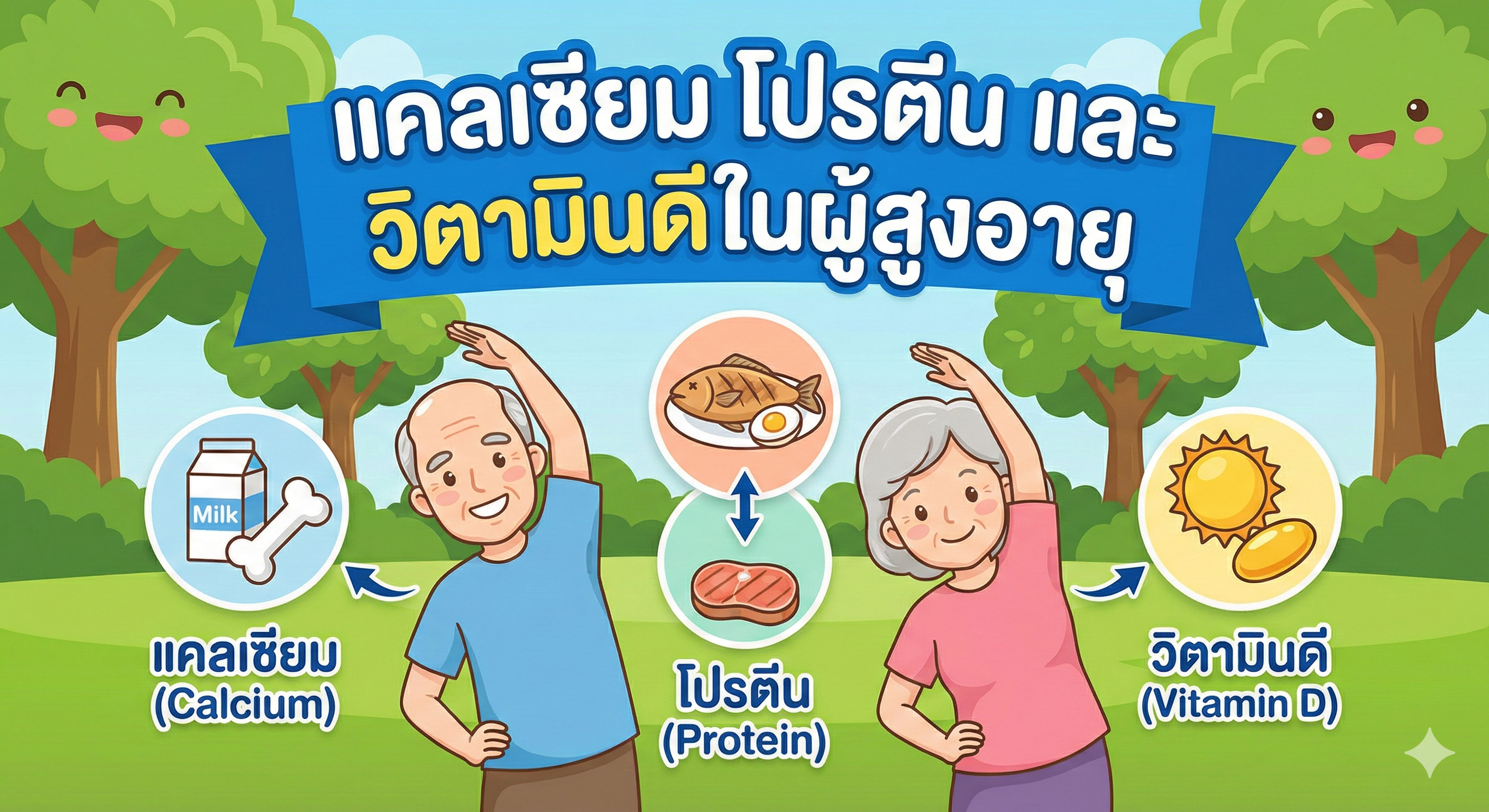
Eating for Strong Bones: The Senior Nutrition Guide (Calcium, Protein, & Vitamin D)
Preventing falls in the elderly isn't just about exercise or home modifications. "Food" is the fundamental building block that strengthens both muscles and bones.
Based on data from the Department of Family Medicine at Ramathibodi Hospital, here is the daily nutritional guide for seniors to stay strong and safe.
1. Calcium: Building Strong Bones
Seniors should consume 1,000 – 1,200 milligrams of Calcium per day to prevent osteoporosis. You can easily find high-calcium sources in these common foods:
Super Sources of Calcium:
Dried Small Shrimp (2 tbsp): Contains up to 460 mg of calcium.
Roasted Black Sesame (2 tbsp): Contains up to 422 mg.
Fresh Milk / Low-Fat Milk (1 glass): Contains approximately 270–295 mg.
Green Leafy Vegetables: Steamed Noni leaves (Bai Yor), Wildbetal leaves (Bai Cha Plu), and Kale are excellent plant-based sources.
2. Protein: Muscle for Balance
Protein is essential for maintaining muscle mass, which helps the elderly maintain better balance and prevents falls.
Recommended Intake: General seniors should consume 1.2 – 1.5 grams of protein per 1 kg of body weight per day.
Important Exception: Patients with Chronic Kidney Disease (Stage 3 and above) must limit protein intake to no more than 1 gram per kg of body weight per day to protect kidney function.
Sources: Lean meat, eggs, milk, and various beans/legumes.
3. Vitamin D: The Absorption Helper
As we age, our skin becomes less efficient at producing Vitamin D from sunlight, making dietary intake or supplementation necessary to help the body absorb calcium effectively.
Recommended Intake: Seniors should get an additional 400 – 800 IU (International Units) per day from food.
Food Sources: Fatty fish (Salmon, Mackerel, Sardines) and Vitamin D-fortified milk.
Treating Vitamin D Deficiency
If a blood test reveals low Vitamin D levels, a doctor may prescribe supplements (Vitamin D2 or D3) based on the severity of the deficiency:
Level 20–30 ng/ml: Supplement 600–800 IU/day.
Level 10–19 ng/ml: Supplement 800–1,000 IU/day.
Level <10 ng/ml (Severe): Requires a high dose of 40,000 IU/week (for 6–8 weeks) until levels normalize, followed by a maintenance dose of 800–1,000 IU/day.
Source: https://www.rama.mahidol.ac.th/fammed/th/article/patient/28jul2020-1235
